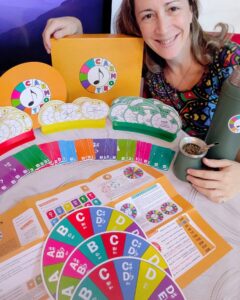
Note: the images on this page come from Carmony’s Spanish-language journey — its first prototypes, notebooks, and original edition. The game is also fully available in English at thegamecrafter.com.
A Dream
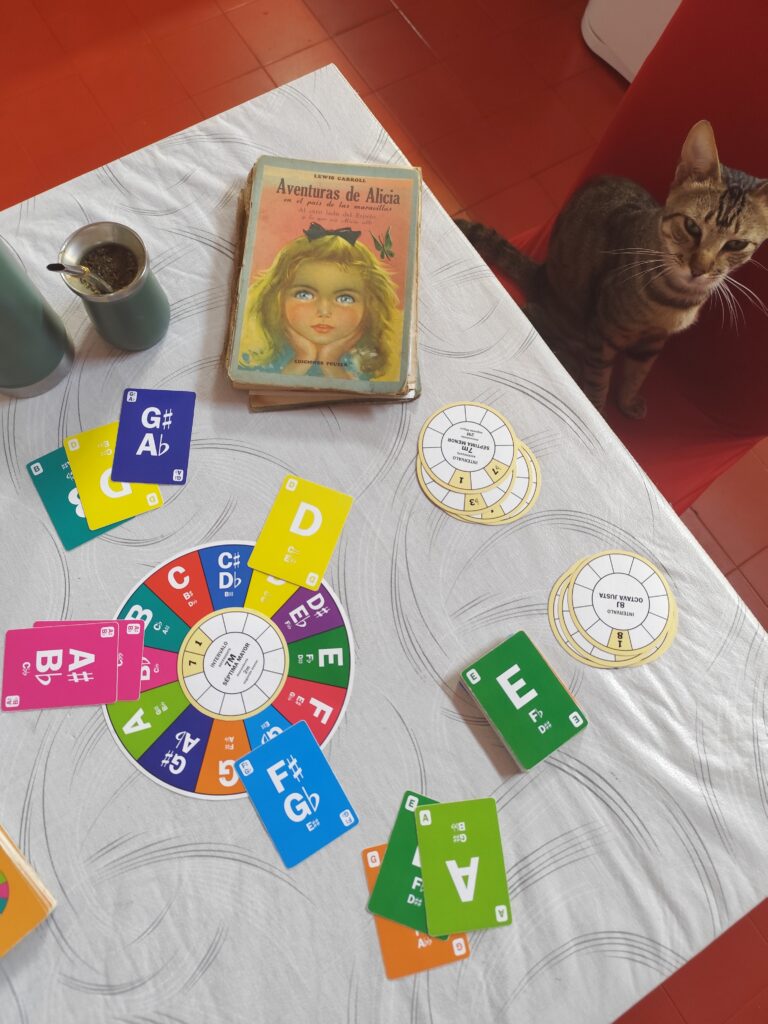
Carmony came to me in a dream. A dream worthy of Alice in Wonderland. The musical notes, the scales, and the chords were the wondrous characters of the story. My inner child was playing Rummy. And then numbers, letters, and colors spun in the air until they formed a circle. Every element fell into place. A circular universe. A card game that would reveal the “mysteries” of music theory. To learn music the best possible way: by playing, guided by curiosity.
The Name
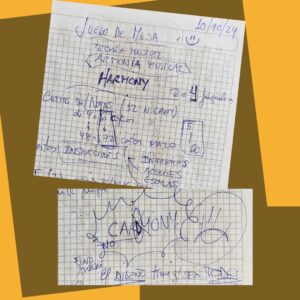
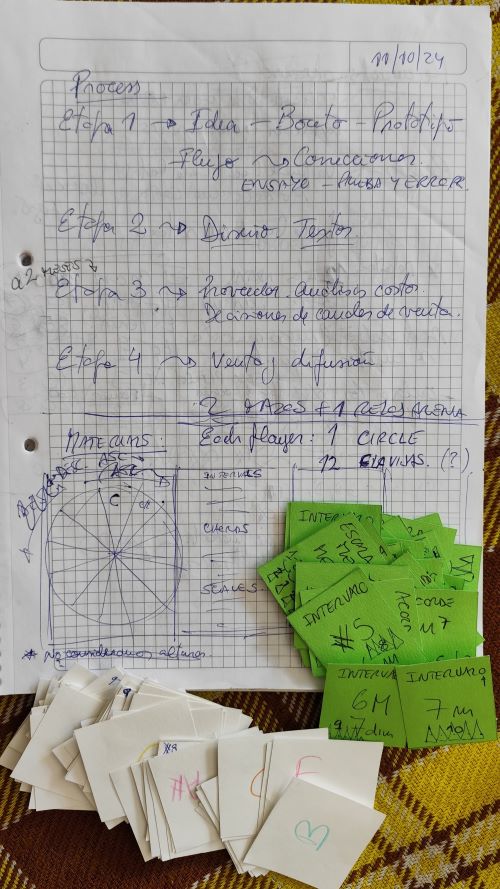
That morning of October 10, 2024, I wrote the main idea in my notebook. And the name of the game too — a play on words between “card” and “harmony.” Later, I realized it made perfect sense that Carmony didn’t keep the “d” of card, because the game runs on wheels — like a car — driving the music harmony machine.
The Origin
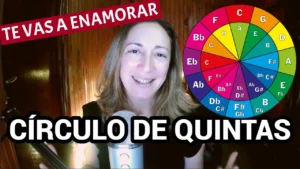
From the very beginning of my self-taught journey with music, I felt a knot I couldn’t untie. It was so confusing to hear musicians talk about “degrees,” count notes without considering zero, or know exactly when to use sharps and flats. Not to mention the mystery of how, just by knowing the key of a song, they could quickly “uncover” all the chords. Not all of them, of course. Most people only peeked into this theoretical universe, calling it tedious or complicated, and agreeing on naming villains like “the circle of fifths” or the dreaded “Greek modes.” As I kept pulling the thread of my own curiosity, I started making YouTube videos and colorful graphics to share what I was discovering. But I felt there had to be a way to bring all those scattered ideas together. A game.
The Idea
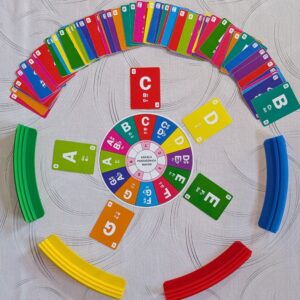
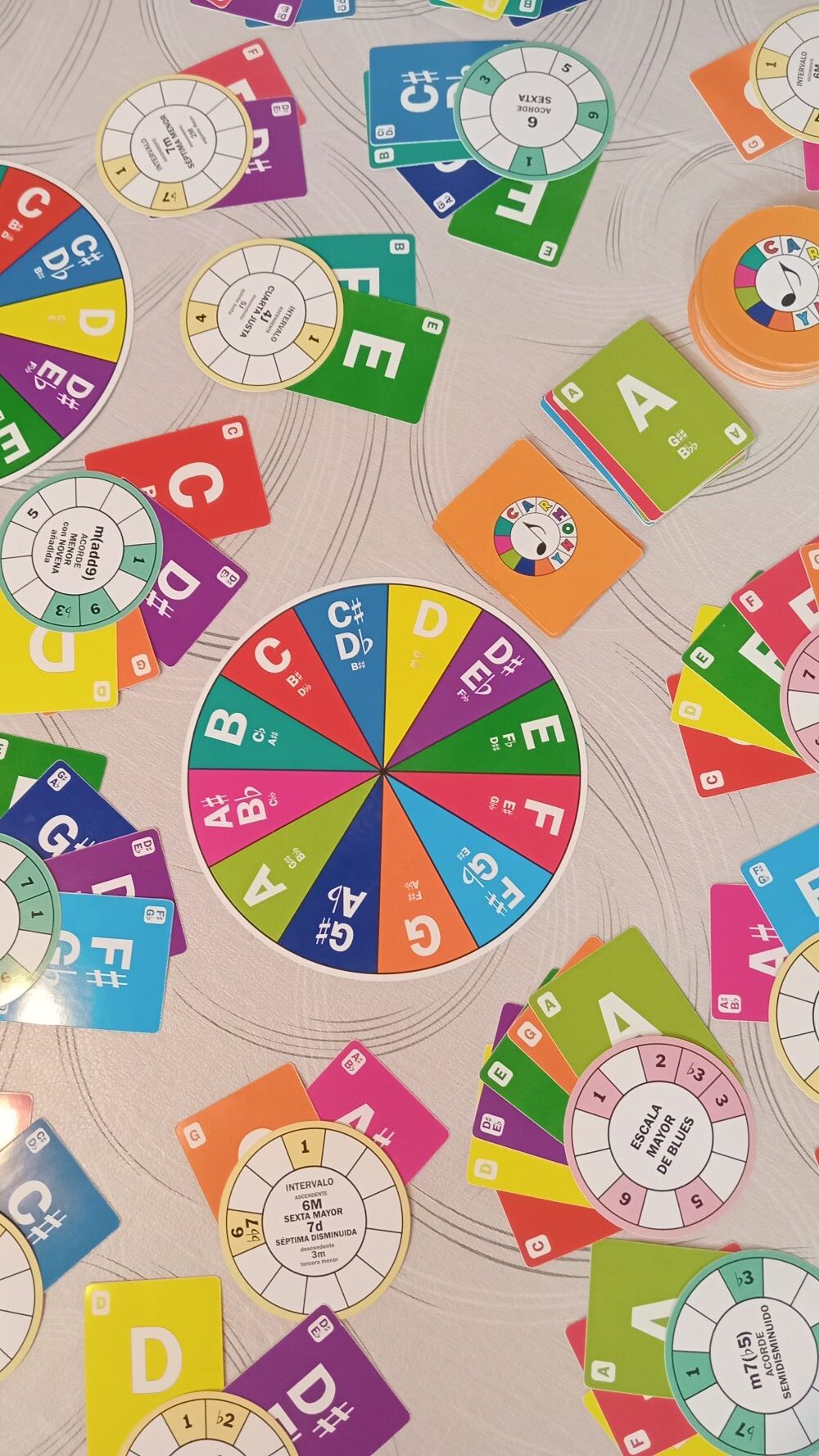
Carmony brings together, in a graphic system based on wheels, the coexistence of the two central views in today’s music theory: the chromatic view (12 notes) and the diatonic view (7 degrees). On top of the big wheel — which holds the chromatic notes — smaller wheels rotate, representing the musical structures: intervals, chords, and scales. By thinking of the 12 notes as one deck of cards and the structures as another deck working as “instruction cards,” the path was to look for analogies with classic board games.
Development
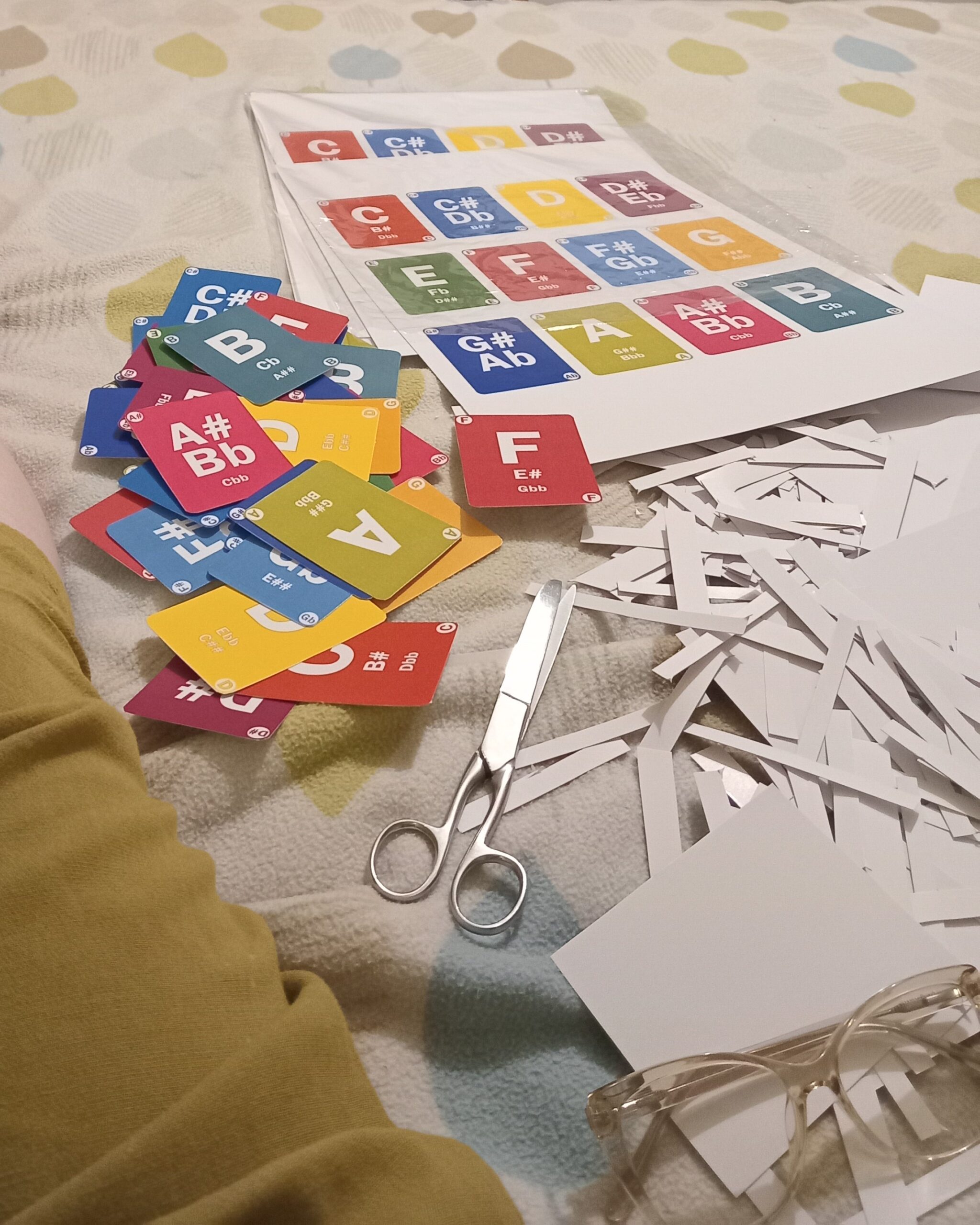
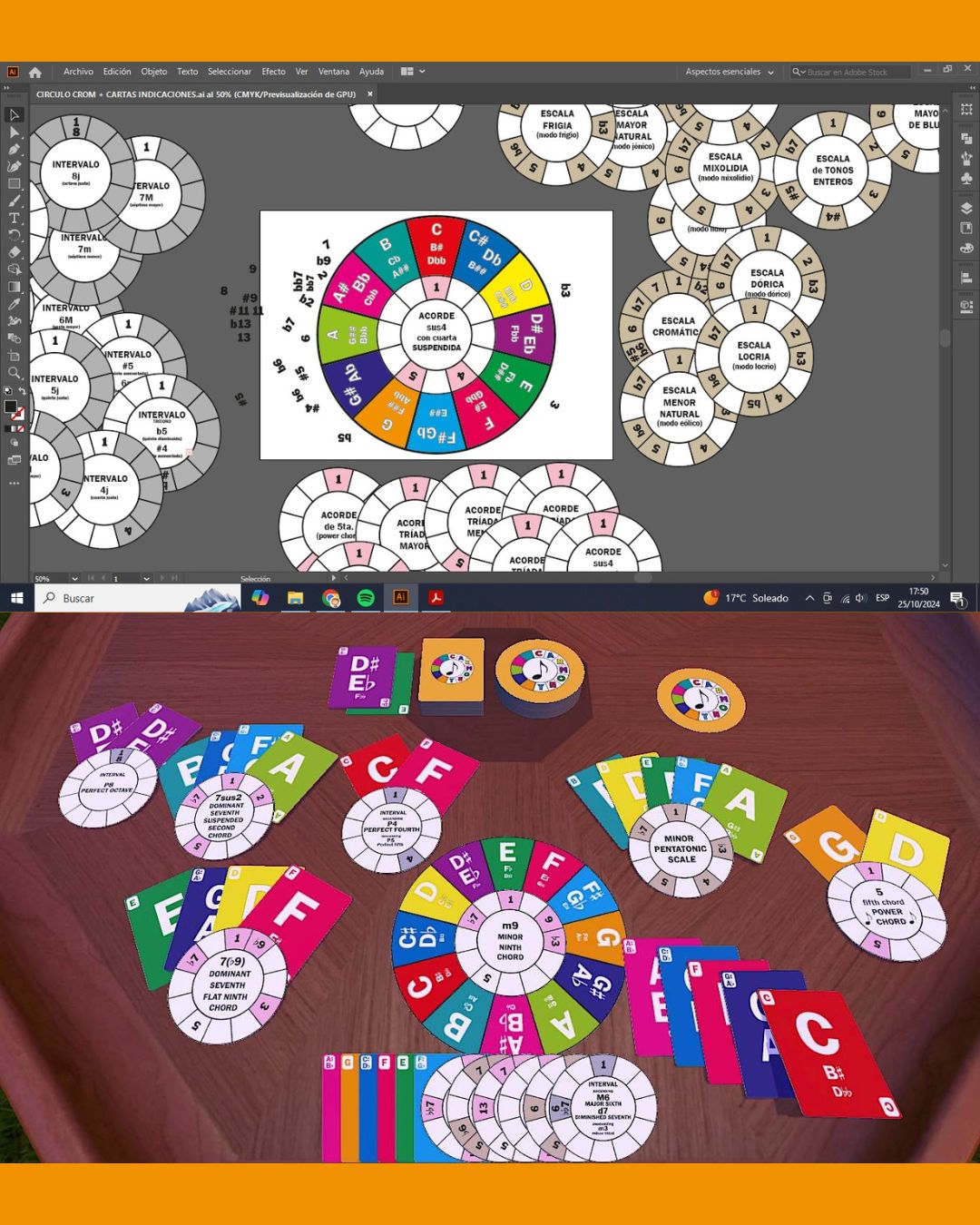
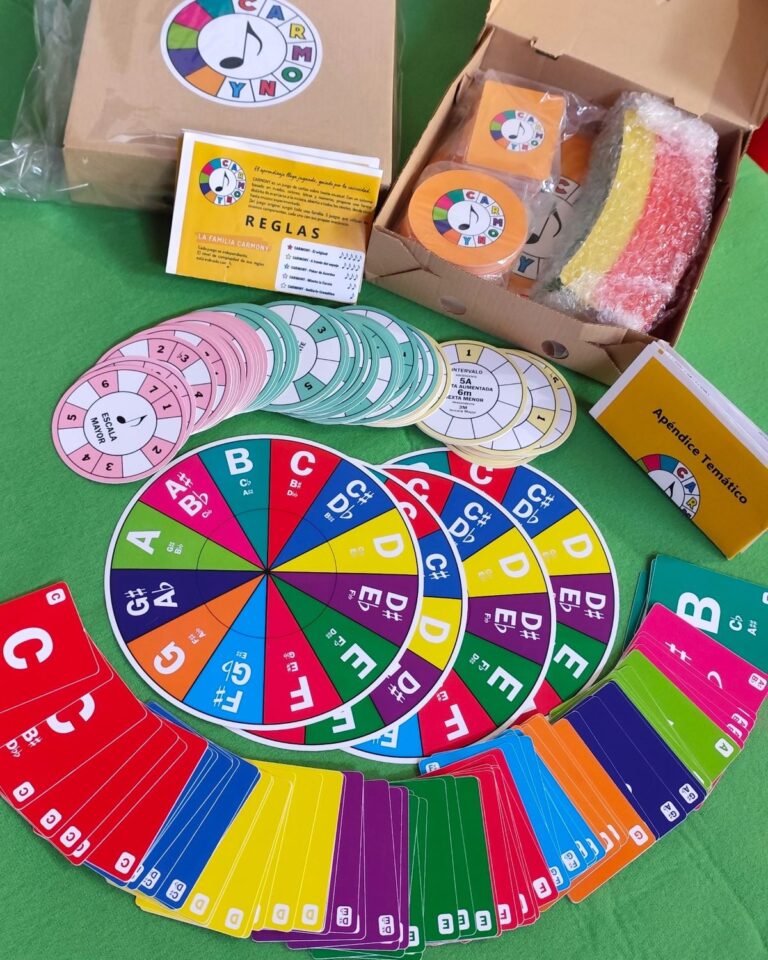
From that dream on, everything was action. Trial and error, as it should be. Many notebooks, sketches, the first prototypes, prints, cutting with scissors, and above all, a lot of “playtest” — what board game creators do (new world unlocked), according to what I learned in my favorite school: YouTube. I also made a digital version on a tabletop game simulator (Tabletop Simulator on Steam). And in March 2025, I officially launched it in two physical versions: one for Argentina, with self-managed production, in small batches, and an international one, using the print-on-demand system on thegamecrafter.com, a website for creators. I made several videos on the channel showcasing the game and using its components to explain key music theory concepts. In 2026, the idea took shape to turn Carmony into a family of games. Using the same system and components, I invented 4 new games, going from greater to lesser complexity in rules and play time. This way, Carmony’s possibilities inside a classroom, for example, expanded — gaining the flexibility it lacked at first.





Carmony, today and tomorrow
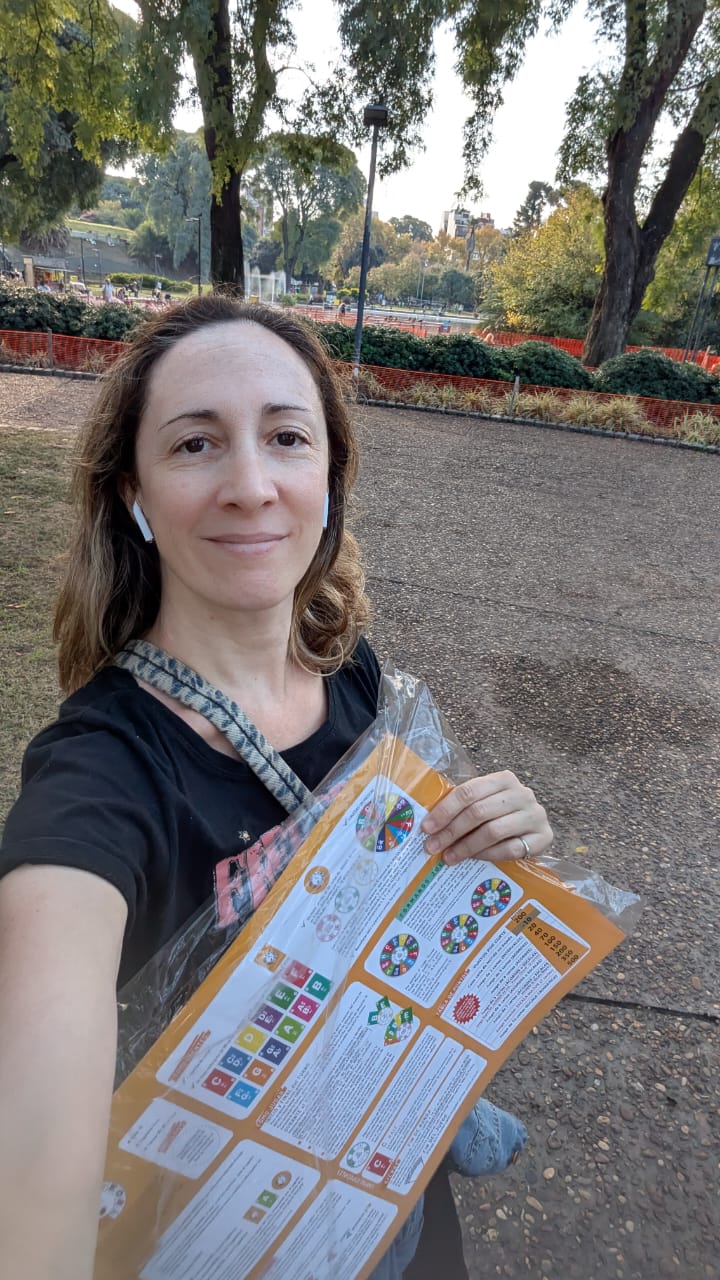
Like any independent, author-made project, Carmony today is a product with high costs and entirely personal dedication. Cared for in every detail and made with the passion that drives me to do everything I do, as I’ve done for many years as an entrepreneur. Tomorrow, perhaps — as Seth Godin says — ten people fall in love with Carmony, and each one tells ten others… who knows. What we do know is that we’ll have been the first to have it and share it. Proud, that it no longer belongs to us.
Fly, Carmony! Good music!
Maya Vazquez